

Customs Clearance Services
Customs clearance services cover activities that ensure the legal movement of goods across national borders and compliance with customs requirements.
Document preparation and administration involve assistance with completing import and export customs declarations, preparing transit documents, and managing the accompanying documentation, such as invoices, packing lists, and transport documents.
We are committed to ensuring a good, smooth, and compliant process for all parties involved.
Customs services encompass a range of processes, but they fundamentally rely on precise and timely information regarding goods and their movement.
Customs authorities demand accurate data on the type, value, origin, and delivery conditions of cargo to assess compliance with regulations and implement the necessary procedures effectively.
What Are Customs Clearance Services?
Customs clearance services involve the necessary administrative and regulatory steps to legally transport goods across international borders.
This process ensures that shipments meet all applicable customs regulations and that the required documentation is submitted accurately.
In practice, customs clearance includes preparing declarations, verifying shipment details, and facilitating communication with customs authorities.
Many businesses turn to customs brokers to handle these procedures and act on their behalf throughout the customs process.
The customs clearance process typically includes:
- Preparing import or export customs declarations
- Reviewing shipment data such as cargo value, origin, and delivery terms
- Ensuring all required documentation is accurate and complete
- Submitting information to customs authorities within the required timeframes
While customs services entail a variety of operational steps, the process relies heavily on receiving accurate and timely shipment information.
Even small discrepancies in documentation or cargo data can result in delays, additional inspections, or administrative complications.
When Are Customs Clearance Services Needed
Customs clearance services become necessary whenever the movement of goods is subject to customs requirements and additional administrative obligations.
This usually occurs when shipments cross international borders and must comply with specific customs procedures and regulations.
In most cases, businesses require customs support in the following situations:
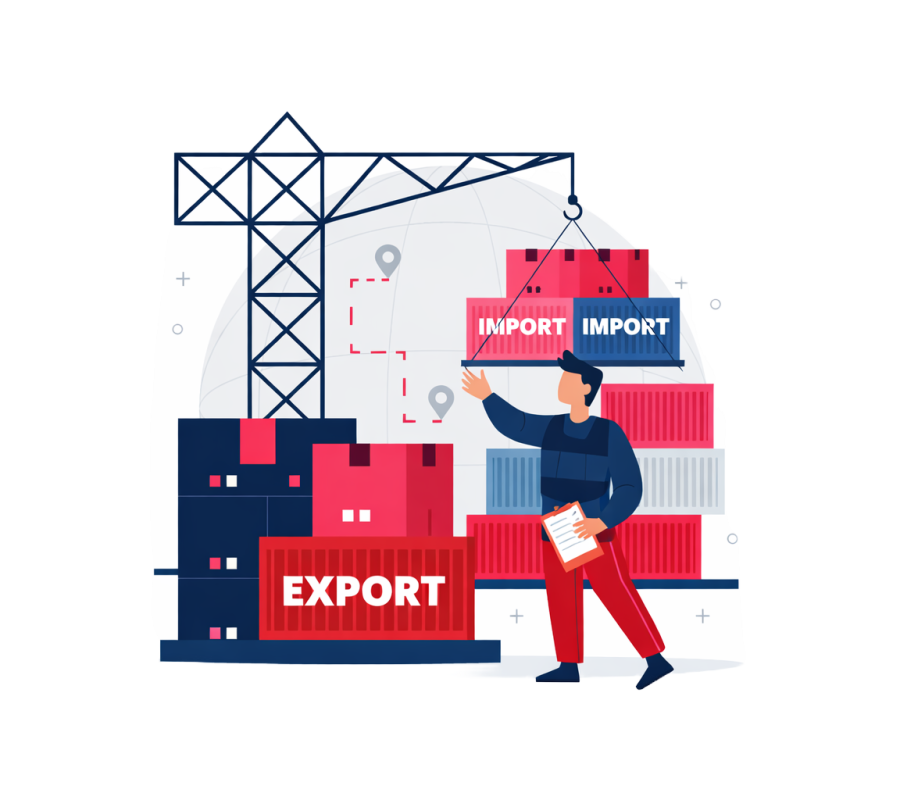
- Goods are imported or exported outside the European Union
- The shipment is subject to additional regulatory requirements, permits, or inspections
- The cargo volume is large, and accurate documentation is essential
- The company has limited experience with customs formalities
- It is important to avoid delays at ports, airports, or border checkpoints
In such situations, customs clearance becomes an essential part of the logistics process.
Effective customs clearance services help businesses navigate international trade requirements, which may vary depending on the type of goods, their origin, and the delivery route.
By ensuring accurate documentation and timely information submission, companies can reduce delays and maintain a smooth and efficient customs process.
Customs Clearance Services
Customs Documentation and HS Code Classification
Accurate documentation plays a crucial role in the customs clearance process.
Typical customs documentation includes:
- Commercial invoice containing information about the seller, buyer, value of goods, and delivery terms
- Packing list detailing the contents, weight, and packaging of the shipment
- Transport documents such as a Bill of Lading, CMR, or Air Waybill
- Customs declaration containing key shipment data required by customs authorities
Another important element of the customs process is classifying goods according to the HS code.
The HS code determines the applicable duties, taxes, and regulatory requirements for the shipment.
Correct classification helps ensure that shipments are processed efficiently and reduces the risk of delays or additional inspections.
Why Companies Choose Professional Customs Clearance Services
Managing customs procedures internally is often a time-consuming process, especially for companies that regularly ship goods internationally.
Professional customs clearance services, often provided by a customs broker, help businesses:
- Reduce administrative workload
- Save time, especially for time-sensitive shipments
- Avoid unnecessary communication with customs authorities
- Ensure that documentation is prepared correctly and submitted on time
Many companies opt to collaborate with a logistics partner, such as a customs broker, to manage Customs clearance services, transportation, and related customs procedures.
This approach allows businesses to focus on their core operations while ensuring that shipments move through customs smoothly.
Customs Clearance Services
EU Customs Regulations
Within the European Union, customs procedures are regulated by the Union Customs Code (UCC) and related regulatory acts.
These rules establish a unified legal framework for the import, export, and transit of goods across EU member states.
The unified system ensures consistent application of customs requirements across all EU countries.
However, certain types of goods may still need to comply with additional regulations, permits, or documentation requirements.
For this reason, understanding Customs clearance services and procedures, like preparing documentation in advance, is an important part of international logistics operations.
Frequently Asked Questions About Customs Clearance Services
Do I have to pay for customs clearance?
In many cases, customs clearance may involve certain costs such as customs duties, VAT, or administrative fees.
However, payment is not always required immediately.
Depending on the shipment type and customs procedure, duties and taxes may be deferred or handled through specific arrangements, such as transit procedures or deferred payment accounts.
Professional customs clearance services help businesses manage these requirements and ensure payments are processed in accordance with applicable customs regulations.
What does it mean if my shipment is in customs clearance?
If a shipment is in customs clearance, it means that customs authorities are reviewing the shipment documentation and information to verify compliance with applicable regulations.
During this stage, customs officials may :
- Check the customs declaration
- Confirm the value and origin of the goods
- Assess applicable duties and taxes.
In some cases, customs may request additional documents or perform a physical inspection of the cargo.
To ensure the customs declaration is prepared correctly, customs clearance services verify shipment information and ensure all required documentation is submitted accurately, reducing the risk of delays during customs clearance.
What is the customs clearance process?
If a shipment is in customs clearance, it means that customs authorities are reviewing the shipment documentation and information to verify compliance with applicable regulations.
During this stage, customs officials may :
- Check the customs declaration
- Confirm the value and origin of the goods
- Assess applicable duties and taxes.
In some cases, customs may request additional documents or perform a physical inspection of the cargo.
To ensure the customs declaration is prepared correctly, customs clearance services verify shipment information and ensure all required documentation is submitted accurately, reducing the risk of delays during customs clearance.
What documents are required for customs clearance?
The customs clearance process relies on accurate documentation that provides detailed information about the shipment.
Common documents required for customs clearance include:
- Commercial invoice
- Packing list
- Transport documents (such as CMR, Bill of Lading, or Air Waybill)
- Customs declaration
These documents provide customs authorities with essential details about the goods, including their value, origin, and delivery terms.
Proper preparation of these documents is an important part of customs clearance services, helping reduce the risk of delays or additional inspections.
Do I need a customs broker for customs clearance?
In some cases, companies may choose to manage customs procedures independently.
However, customs requirements can be complex, particularly when shipments involve international trade outside the European Union or goods subject to additional regulations.
A customs broker can assist with preparing declarations, classifying goods according to HS codes, and communicating with customs authorities when clarification is required.
Many businesses rely on professional customs clearance services to ensure that documentation is prepared correctly and that shipments comply with customs regulations.
If you require reliable customs clearance services or assistance with customs documentation, feel free to contact our team.
Professional customs clearance services help ensure that shipments comply with regulations and move through customs smoothly.
Laura Jauce
Transport and logistics manager, Customs broker
📞 Tel. Nr.: +371 264-50-597
📧 E-pasts: assistant@a-es.eu
Laura Šinkeviča
Logistics Specialist, Customs Broker
📞 Tel. Nr.: +371 27-803-623
📧 E-pasts: cargo@a-es.eu
📌 If you need dependable customs clearance services or assistance with customs documentation, please reach out to our customs specialists.
We can review the classification of your goods, help you determine the correct HS code, and ensure that the customs declaration is accurately prepared before submission.
With the right support, customs clearance can be a smooth and efficient process.